Imagine a Shelf So Smart That It Knows What’s Missing
John Snediger
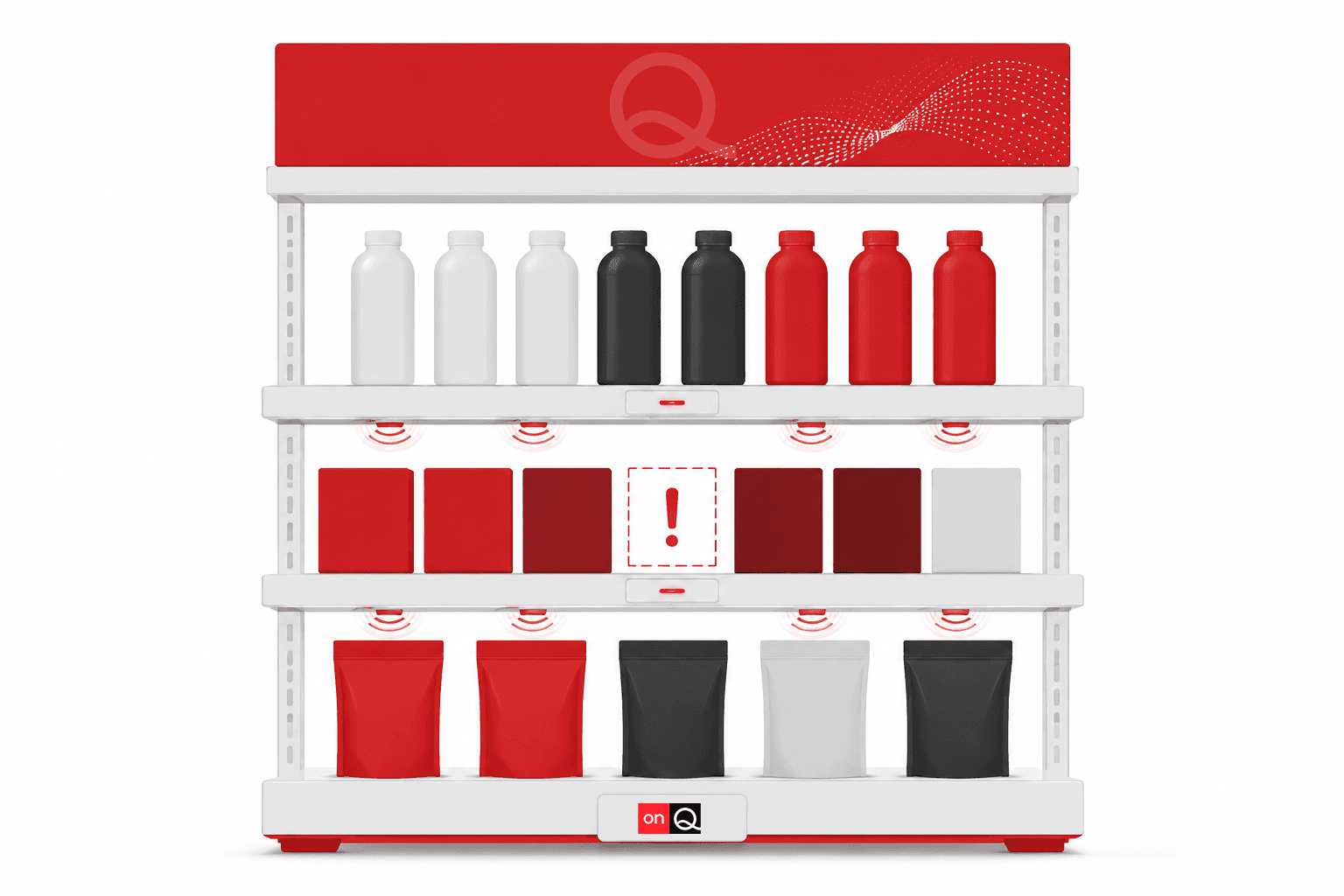
Walk into almost any retail store and the same issues reveal themselves quickly: out-of-stock product, misplaced items, and signage that no longer matches what’s actually on display. For brands and retailers, this isn’t just a minor execution gap, it’s a retail compliance problem that directly impacts sales, brand perception, and the integrity of in-store experiences. And while the questions are simple: Is the product in stock? Is it merchandised correctly? Is the display compliant? The answers are anything but, especially when scaled across hundreds or thousands of locations.
At OnQ, we’ve been exploring a different approach to retail compliance, one that doesn’t rely on adding friction to the store environment. Instead of tagging products, applying stickers, or increasing manual audits, we started with a more fundamental idea: what if the shelf itself could provide the answer? Our prototype smart shelf uses embedded load cell sensors to continuously measure the weight of the products sitting on it. Multiple sensors work together to create an accurate reading, while a compact onboard system communicates via Wi-Fi with our Converge platform.
Because Converge maintains a live profile of every product on display (including expected weight) the system can instantly detect when something changes. A product removed. An item misplaced. A display that’s no longer aligned to planogram. Without cameras, without tagging, and without requiring store associates to intervene, the shelf becomes a real-time signal for compliance.
That signal unlocks something much more powerful: continuous visibility. Instead of relying on periodic store checks or manual reporting, brands and retailers can understand shelf conditions in real time, spotting out-of-stocks, identifying compliance issues, and recognizing patterns across locations. Compliance shifts from reactive to proactive, from occasional to always-on.
And this is just the beginning. As we continue to explore what’s possible, additional layers like overhead sensors or computer vision could extend this foundation even further. Imagine shelves that don’t just detect what’s missing, but also understand product placement, visual standards, and overall execution. With AI in the mix, including the potential to analyze images against merchandising guidelines, retail environments could begin to self-audit at scale.
What makes this approach especially compelling is what it doesn’t require. No RFID tags. No packaging . changes. No additional burden on store teams. In a category where many “smart retail” solutions introduce complexity, we’re focused on removing it, making the environment itself more intelligent instead.
Retail compliance has long been manual, inconsistent, and difficult to scale. But it doesn’t have to stay that way. Sometimes, the smartest solution isn’t adding more process, it’s rethinking the shelf entirely.