Is Corrugate Dead? Three Ways Semi-Permanent Displays are Replacing Corrugate in Club Retail Environments
John Snedigar
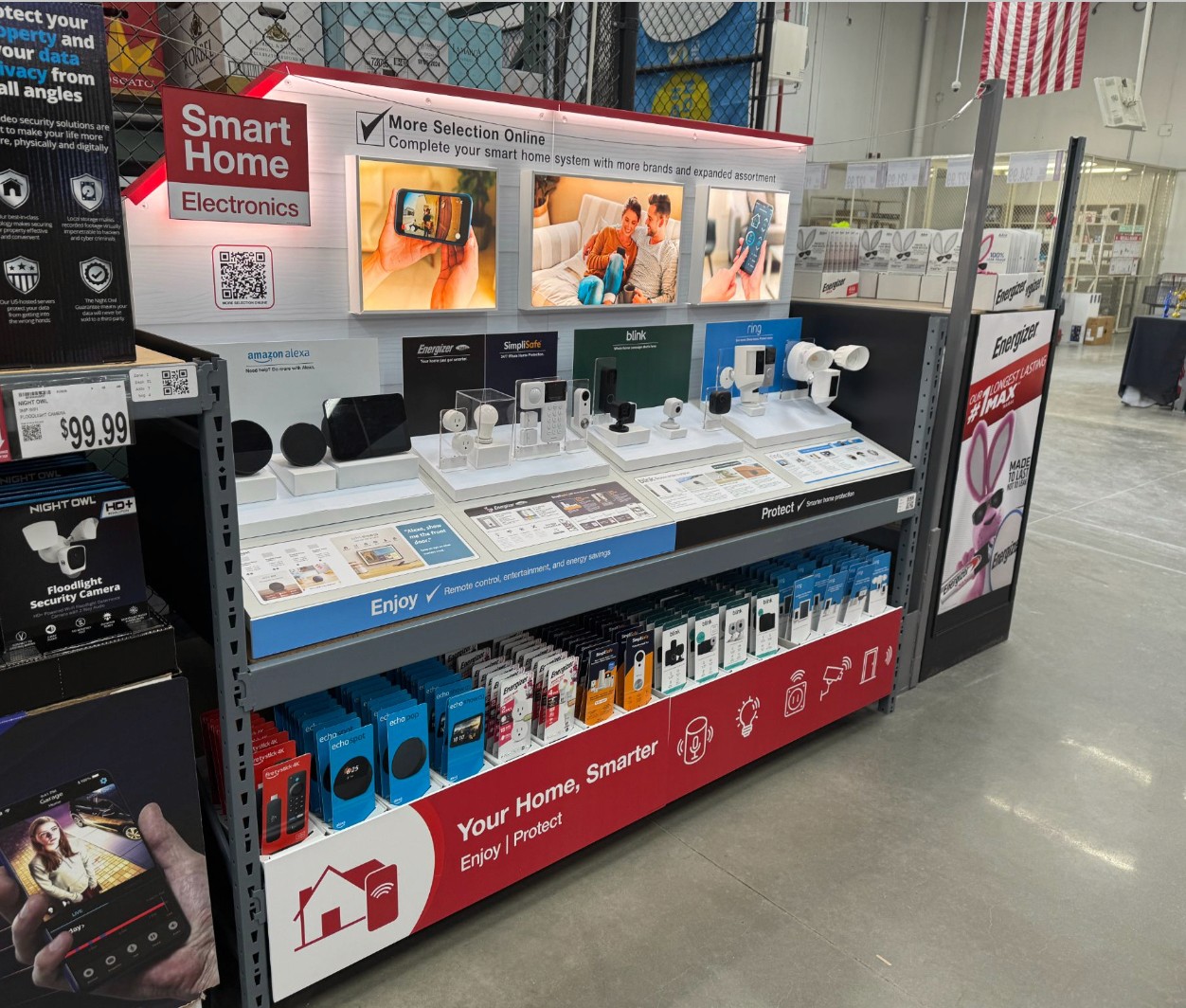
Retail environments are evolving faster than ever. Product cycles are accelerating. Shopper expectations continue to rise. And categories like consumer electronics and gaming demand both constant freshness and operational durability.
For club warehouse retailers, this creates a unique merchandising challenge. Fixtures must withstand heavy traffic, constant interaction, and multi-year product lifecycles while still delivering compelling brand storytelling. Temporary displays often wear out too quickly. Fully permanent fixtures can become obsolete when products change.
This is where semi-permanent retail displays deliver their greatest value. A built-to-last, modular display platform provides durability without sacrificing flexibility. It creates a consistent branded presence while allowing retailers and brands to evolve the experience over time through refreshes rather than full replacements.
In high-traffic club environments especially, semi-permanent displays are often the most strategically sound investment.
Here are three situations where a built-to-last semi-permanent display strategy makes the most sense:
1. High-Traffic, High-Touch Categories Require Structural Durability
Club warehouse environments present unique physical demands compared to traditional retail. Shoppers interact directly with displays. Fixtures experience frequent cart contact. Products are handled repeatedly. High shopper volume compresses wear cycles dramatically.
In categories like gaming, computing, consumer electronics and connected devices, displays are not simply visual merchandising tools. They are physical engagement platforms. This is why durability becomes a performance requirement, not just a design consideration.
Semi-permanent displays provide reinforced construction, premium materials and engineered stability designed to withstand continuous interaction over multiple years. This reduces replacement costs and minimizes operational disruption compared to temporary programs that degrade quickly under heavy use.
A recent example of this approach can be seen in Nvidia’s first-ever club warehouse display rollout. The display platform we designed creates a unified branded stage for multiple partner gaming laptop manufacturers powered by Nvidia technology while maintaining the flexibility to evolve as new products launch.
The modular architecture enables rapid updates without replacing the entire fixture, allowing the display to remain relevant even as hardware cycles change.
2. Display Fatigue Signals the Need for a Platform, Not a Program
Retail displays naturally lose impact over time. Messaging becomes dated. Graphics fade. Shopper attention declines as novelty disappears. In environments with consistent shopper traffic, this “display fatigue” can occur quickly. Semi-permanent platforms solve this challenge by separating the structural investment from the visual refresh cycle.
Instead of rebuilding fixtures every season, brands can update graphics, messaging panels, product holders or digital components while preserving the display’s core architecture. This dramatically reduces long-term cost while maintaining a fresh consumer experience.
The key strategic shift is moving from campaign-based displays to platform-based merchandising. A strong example of this model is the nationwide PlayStation rollout across U.S. Costco warehouses.
The display system was engineered as a long-term modular platform capable of supporting future console generations, accessory launches and evolving merchandising needs without requiring full replacement. By designing for refreshability from the start, the program protects investment while ensuring the experience remains current for years.
This approach transforms displays from short-term marketing assets into durable retail infrastructure.
3. Frequent Customer Interaction Demands Both Engagement and Flexibility
In high-interest categories, shoppers want to explore products physically before purchasing. They want to compare features, understand benefits, and interact with accessories or demo units.
It naturally follows that displays must accomplish two goals simultaneously:
Deliver an engaging, hands-on experience
Maintain long-term adaptability as product assortments evolve
Semi-permanent modular platforms are uniquely suited to balance these needs. Because the underlying fixture remains the same, brands can swap components, reposition product zones, integrate new hardware or update storytelling elements without rebuilding from scratch. This allows displays to evolve alongside the category rather than becoming obsolete.
In the Nvidia rollout, this flexibility was essential. The display needed to accommodate multiple partner brands, shifting laptop assortments and future technology updates while maintaining a consistent Nvidia brand presence across more than 600 locations.
Similarly, the PlayStation platform was engineered to reconfigure rapidly for new hardware releases while preserving a premium, joyful brand experience for shoppers.
In both cases, modularity enables long-term relevance.
Why Semi-Permanent Displays Often Deliver the Best ROI in Club Retail
From a financial perspective, semi-permanent displays frequently outperform both temporary and fully permanent approaches. Temporary displays carry lower upfront costs but require frequent replacement, driving higher total lifecycle expenses. Fully permanent fixtures offer durability but may lack adaptability, increasing the risk of obsolescence when product strategies change.
Semi-permanent platforms occupy the optimal middle ground. They provide:
Multi-year durability in demanding environments
Lower lifecycle cost through refreshable components
Consistent brand presence across locations
Flexibility for evolving assortments and launches
Reduced operational disruption during updates
Scalable deployment across national retail footprints
For club warehouse retailers operating at scale, these advantages compound quickly. A fixture deployed across hundreds of locations must perform reliably for years while remaining relevant to changing product roadmaps. Modular semi-permanent platforms enable exactly that.
Rethinking Longevity in Retail Displays
Retail merchandising is often viewed through the lens of campaign cycles, seasonal programs, promotional windows, and product launches. But in high-traffic environments like club retail, longevity itself becomes a strategic advantage. A built-to-last display platform does more than reduce replacement costs. It creates continuity and reinforces brand presence over time. It supports evolving product narratives without constant reinvestment.
Most importantly, it aligns the physical environment with the long-term pace of innovation in categories like gaming and computing. The goal is to balance permanence with the flexibility to achieve sustained relevance. Increasingly, semi-permanent modular displays are proving to be the most effective way to achieve both.